
woodplantFurniturefurniture
Macrame Lounge Chair
Only 2 left
Enquire on WhatsAppWe’ll confirm availability and arrange pickup or shipping.
We’ll confirm availability and arrange pickup or shipping.
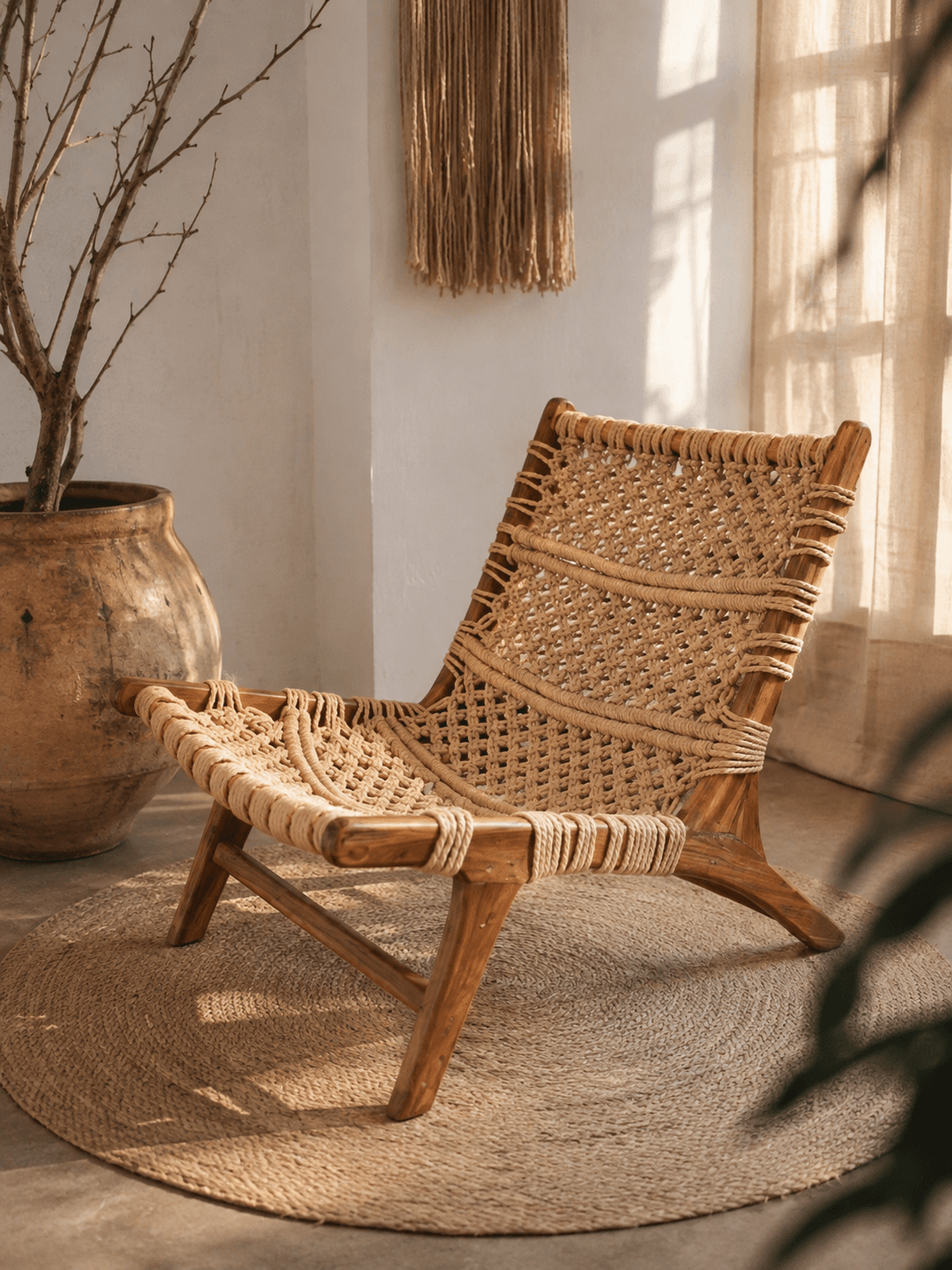
Hand-knotted cotton macramé stretched over a solid wood frame — cord by cord, by hand, no machine weaving involved. A chair that's as much textile as furniture.
Macramé is knot-work, not weaving — thousands of individual knots tied by hand, row by row, until the cord itself becomes the seat and back. There's no loom involved. Every curve and give in the finished piece comes from how tightly and how evenly each knot was pulled, which is why a hand-knotted chair never quite matches another — the hand that tied it left its own rhythm in the spacing.
The frame underneath is solid wood, shaped to take the tension the knotted cord puts on it as it's pulled taut across the frame during construction, and to keep taking your weight afterward. Cotton cord breathes and gives slightly with use — it's a warmer, softer sit than a hard wood or rattan seat, closer to a woven hammock than a chair in how it holds you.
Cotton cord sits in the Plant element of the Shaman Kathmandu framework, alongside the Wood of the frame beneath it — soft, breathing, grown material worked by hand into something structural. The natural, undyed cord colour is left as it comes off the spool, so the piece ages the way raw cotton does — a slight warming and softening of tone with light and use, not a coating that wears off.
We source from South Asian artisans who tie by hand rather than machine-press the cord — macramé of this scale and quality is a different regional craft from the local Kathmandu wood-carving most of our statues come from. Each chair is finished and inspected before it ships. No two are identical — knot spacing, cord tension, the exact drape of the seat will vary slightly between pieces. That's the nature of hand-tied work.
A statement seat for a reading corner, a plant-filled window, or anywhere you want texture and give rather than a hard edge.
Element: Plant & Wood (cotton macramé cord over a solid wood frame — grown fibre worked by hand, structure beneath it) Origin: Hand-knotted, South Asia.
Dust or vacuum with a low-suction brush attachment to lift dust from between the knots. Spot-clean the cord with a barely damp cloth and mild soap; do not soak or machine-wash. Keep out of prolonged direct sun and away from standing moisture — cotton cord can weaken and discolour with sustained damp. Check knot tension occasionally with regular heavy use and have any loosened cord re-tied by a macramé artisan rather than pulled tight yourself. This is a hand-tied piece — treat the cord as you would any natural-fibre textile.